Poster a Day Design Challenge
Exploring One Idea Each Day Through Conceptual Posters
2026
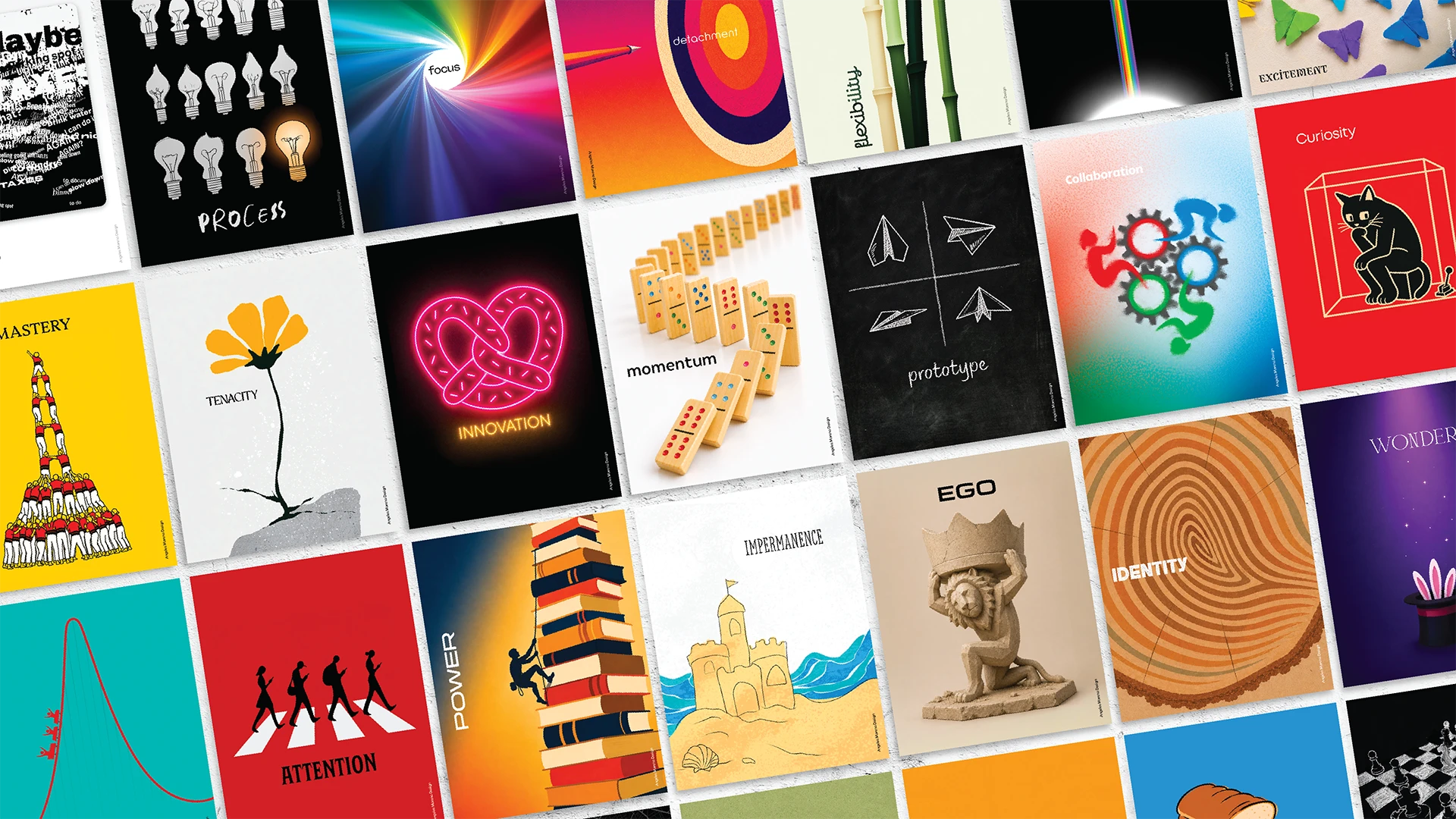
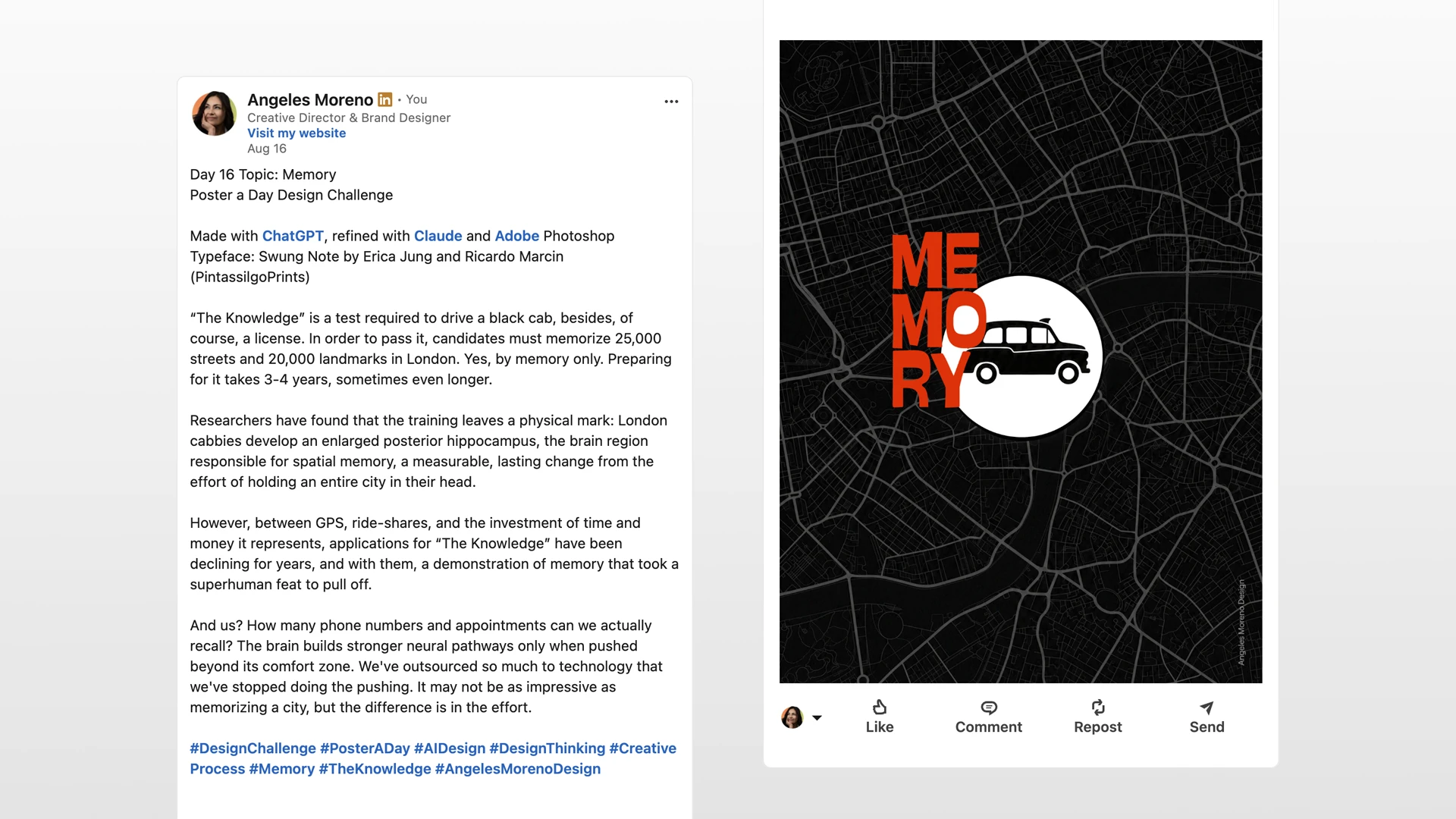
Throughout August 2026, I created one poster a day with the help of generative AI and shared each one on LinkedIn: a topic, an image, a story, a post.
I wanted to bring GenAI into the creative process and stretch the limits of what it can do today. I chose 31 topics, from stillness and focus to identity and mastery, and worked with the tools I already use: Midjourney, ChatGPT, Claude, and Adobe's Firefly features.
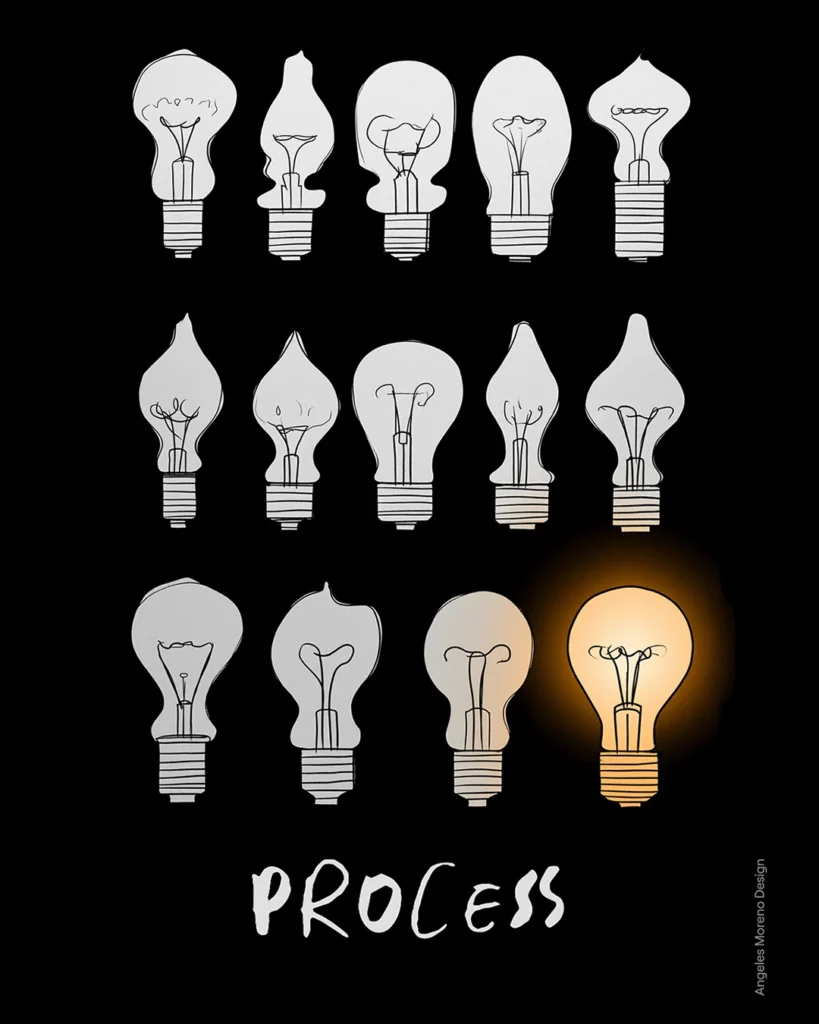
Each poster started as a hand sketch, became a prompt, and went through rounds of evaluation and iteration, with a one-hour limit for the AI stage. I chose every typeface by hand, highlighting foundries like TypeType, Fontfabric, TypeTogether, and Pangram Pangram, and finished each piece in Photoshop, in two to three hours a day.
Five concepts proved hardest for the models to reproduce: consistency, perspective, patterns, depth, and metaphor. They kept "correcting" whatever didn't make sense to them: the dramatic chessboard angle in Vision, the exact dots on each domino in Momentum, the position of a monkey's leg in Clarity, and three bikers riding on interlocking gears in Collaboration. The more an idea broke logic on purpose, the harder the AI worked to fix it.
GenAI can learn rules and match a mood, a palette, or a style, but the intention behind the choices still comes from the designer. It isn't about whether to use GenAI. It's about knowing when and how.